Psychotherapy
Many words coming up! If you prefer conversation, we can arrange a phone call.
Personalised psychotherapy
Focussed, time-limited counselling and psychotherapy can be appropriate, highly effective and therapeutic – it depends on what we discuss in the assessment (see FAQ list on the home page of this website for more on the first few sessions). Creative methods and somatic work including mindfulness interventions can be extremely supportive of significant change in this way of working together. Additional support such as support groups outside of sessions can really help alongside.
Depth psychotherapy aims to help people change in profound ways and starts with compassionately observing our inner and outer life. We would meet with consistency 1-2 times per week, usually over several years. Session times are reserved exclusively for you in depth psychotherapy and I would hold the space, continuing the work of psychotherapy in your absence if you attend a meeting.
A belief underpinning depth psychotherapy is that causes of pain in our present day life are often unconscious. Other forms of psychotherapy are excellent for accountability, working with goals, caring for grief, and many other human experiences. In depth therapy, by coming to understand unconscious often life-long patterns and blind spots, we learn how to care differently for our whole selves.
During depth psychotherapy, care and attention is paid to inevitable conflicts and pain which arise between the client and psychotherapist. Through discussion of these moments in the therapeutic relationship, valuable insights are gained which help a person develop a greater sense of capacity to feel and function in their relationships and work. The insights gained through these intensely felt relational experiences are not only cognitive, they make space for the possibility of a depth of change at the bodily and emotional level, if you choose to integrate what emerges in the therapy.
The idea is that being our whole selves in a therapeutic relationship can give rise to feelings of connection, relief and safety. The therapeutic relationship is not a social one in which we are supposed to feel pressure to be a certain way: it is designed to open an expensive space to include all of you without judgement. And so when we do inevitably feel that pressure – these feelings are to be welcomed, cared for and worked through in the psychotherapy. The feelings of safety which come are not based on conditions of being a certain friendly or likeable way within social norms – but in the therapy room are based instead on the experience of being together with another person and being seen as we truly are. This can be challenging and painful – but it is what psychotherapy is for. From this flexible foundation of wholeness in relationship – light and shadow – we can discover more energy to relax, think and create new options for our lives.
Notes on neurodiversity. This might make a big difference to how we work together, perhaps with significant adaptations, and it may not make much difference at all. Like everything else it will depend on our discussions and what we figure out together. I’m late-diagnosed AuDHD and thinking along with many others about what role these psychiatric labels have to offer us in psychotherapy. If neurodiversity is a part of the way you know yourself, think about and care for yourself, then it’s as welcome as everything else you might want to bring as a topic for caring and reflection. It can make a big difference within our current society to have a diagnosed or undiagnosed condition of any kind, whether we agree with it or not. I’m familiar with most terminology and happy to explore yours. Our work in depth psychotherapy, I believe, is to reflect on your own conscious and unconscious experience of being a human being with a nervous system and a psyche – whatever language or methods help us to do that.
Creative therapies and dreamwork
My practice is generally based on a relational psychotherapy, where benefit is gained through the challenging process of building a relationship with your therapist, in which some difficult and life-giving dynamics and feelings can be cared for and reflected on. Dialogue can be very creative and emotionally impactful and there is no pressure to do more or less in any therapy session than you want to.
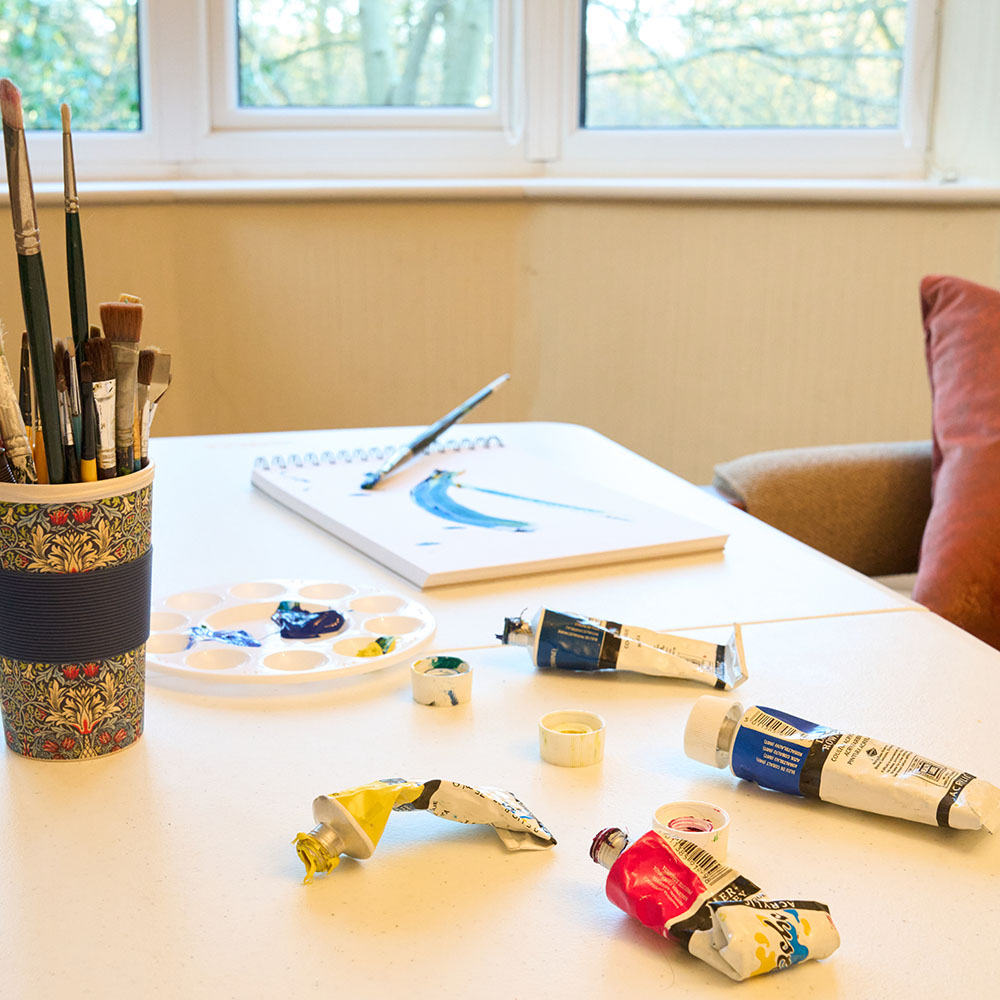
At times, however, it is more helpful and effective to make use of creative ways of exploring, beyond the verbal. This is when you might use paints, drawing, music, metaphor or clay to continue your inner journey. You can also see more on my page on ShadowWork.
I also have cautious and profound faith in the use of psychedelic therapies. I don’t offer any work that is illegal in the UK, but I know that the visions and experiences which people have within legal and safe settings can be life-changing if well prepared-for and practically integrated. I therefore offer preparation and integration psychotherapy for people who choose to pursue this avenue of spiritual and psychological understanding.
Dreamwork is another very powerful way of exploring and understanding what might be needed for your symptoms to reduce and a dream journal can be a very helpful aide. Dreams help us work with the raw unfiltered material of your unconscious mind and, given that 90% of our minds is unconscious, attending to dreams is an extremely powerful and practical route to self-understanding and change.
Sand tray therapy
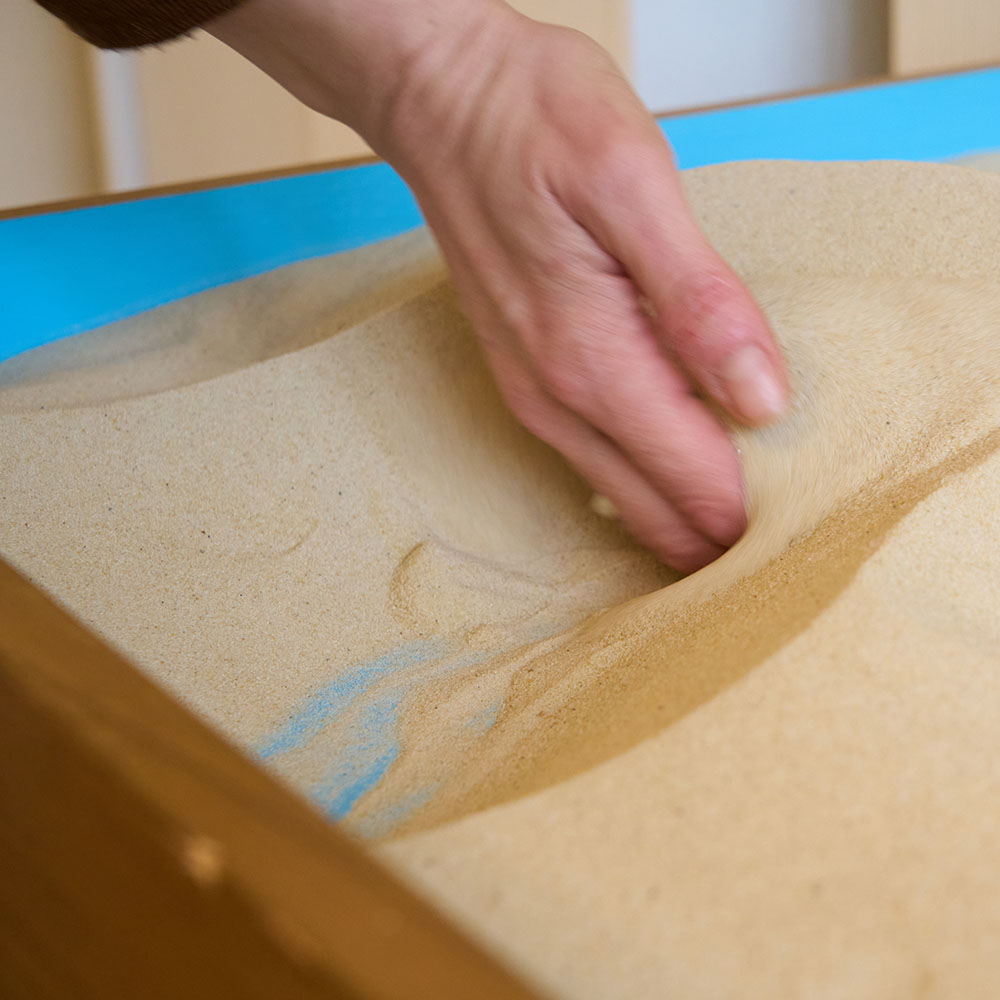
Sand tray therapy allows you to draw on the transformative power of imagination, the unconscious mind and the body.
One benefit can be gained by creating scenes and landscapes which help you to visualise, express and decode feelings so that you can discover what they might be telling you.
Sand tray therapy can also help people who find it difficult to articulate their feelings – particularly people who experience ‘blocks’ to feeling, feel somewhat numb, or are simply sick of talking.
By creating visual representations of something going on, either within you or with other people, a great sense of perspective can be reached and surprising solutions found.
Simply touching sand, this ancient and tactile material, can provide profound catharsis and evocation of memories where emotion may have been previously blocked.
Finally, the tactile experience of moving sand can be grounding and helpful when and if you begin to feel emotions which are overwhelming. The ways we might work with sand will depend entirely on what has brought you to psychotherapy.